
Photo: Vmenkov / CC BY-SA 3.0
Astana, Capital of Kazakhstan
Last reviewed on 2 November 2026
Glass towers, giant mosques and serious winters on the northern steppe
Astana is the capital of Kazakhstan: a planned city of about 1.7 million people on the northern steppe, which replaced Almaty as the seat of government in December 1997. It is where the country built its post-Soviet self-image, with a tent and a pyramid by Foster + Partners, a golden observation tower and, since 2022, the largest mosque in Central Asia, all on open plain where January averages about -14°C.
Two days covers the main sights. Come for architecture, museums and recent history rather than mountains and food, which are Almaty's strengths. The city also became much easier to visit in May 2026, when a new light rail line opened from the airport through the government quarter to Nurly Zhol railway station. Check our visa guide for the current entry rules before you book.
Where Is Astana?
Astana sits on the Esil (Ishim) River in north-central Kazakhstan, about 1,200km from Almaty by rail and 245km from the lakes of Borovoe (Burabay).
Is It Astana or Nur-Sultan?
It is Astana. The city was renamed Nur-Sultan in March 2019 to honour Nursultan Nazarbayev as he stepped down after almost three decades as president, and the name was changed back in September 2022. Older maps, booking sites and apps may still show Nur-Sultan, and the airport still carries Nazarbayev's name, although you will also see it written as Astana International (NQZ).
This is not the city's first change of identity. Its names trace most of the country's modern history:
- Akmolinsk (from 1832): a town grew from a settlement founded in 1830 under the Russian Empire
- Tselinograd (1961): "City of Virgin Lands", renamed under Khrushchev
- Akmola (1991): the name adopted after independence
- Astana (1998): the Kazakh word for "capital", adopted after the government moved here
- Nur-Sultan (2019–2022): the only break in the current name
How Astana Is Laid Out: Right Bank and Left Bank
The Esil River divides Astana into an older city and a new one, and knowing which is which makes the place much easier to plan.
- Right Bank (north of the river): the Soviet-era town, with lower-rise streets, older apartment blocks and generally cheaper hotels. It feels more lived-in than the new city.
- Left Bank (south of the river): the capital built after 1997. Nurzhol Boulevard runs through its centre from Khan Shatyr past Bayterek to Ak Orda, the presidential palace.
- East of Ak Orda: across the river from the palace, the Palace of Peace and Reconciliation, Hazret Sultan Mosque and the National Museum stand close together.
- South along Mangilik El Avenue: the former Expo 2017 site with Nur Alem, then the Astana Grand Mosque.
Distances are longer than they look. The avenues are wide and the blocks are huge, so a walk that seems like ten minutes on the map can take half an hour, and in winter you will not want to do it. Use the light rail, or a taxi app, between clusters.
Top Things to Do in Astana
Nurzhol Boulevard and the Left Bank
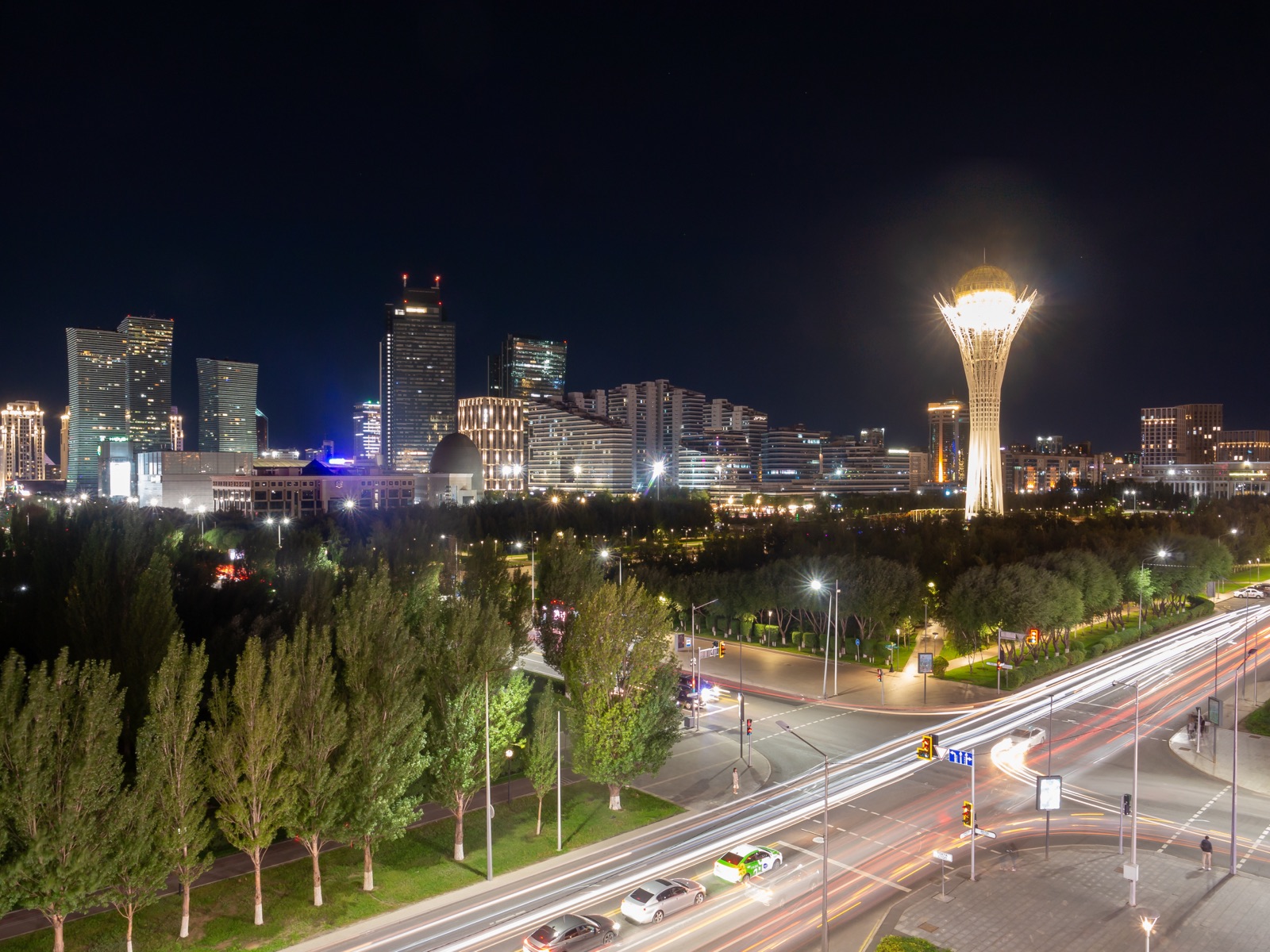
Bayterek
The 105-metre monument that became the symbol of the capital, completed in 2002 and based on the legend of a tree of life. A lift rises into the golden sphere, where the observation deck stands at 97 metres, a nod to 1997. The operator lists adult tickets at 2,000₸ and hours of 10:00–21:00 from September to May, 10:00–22:00 in summer, but some visitors report paying more, so carry cash.
Nurzhol Boulevard
The pedestrian spine of the new city, running between Khan Shatyr and Bayterek and on towards Ak Orda, which you see from the outside. Walk it at dusk, when the towers light up. In winter the wind along the boulevard is the main obstacle.
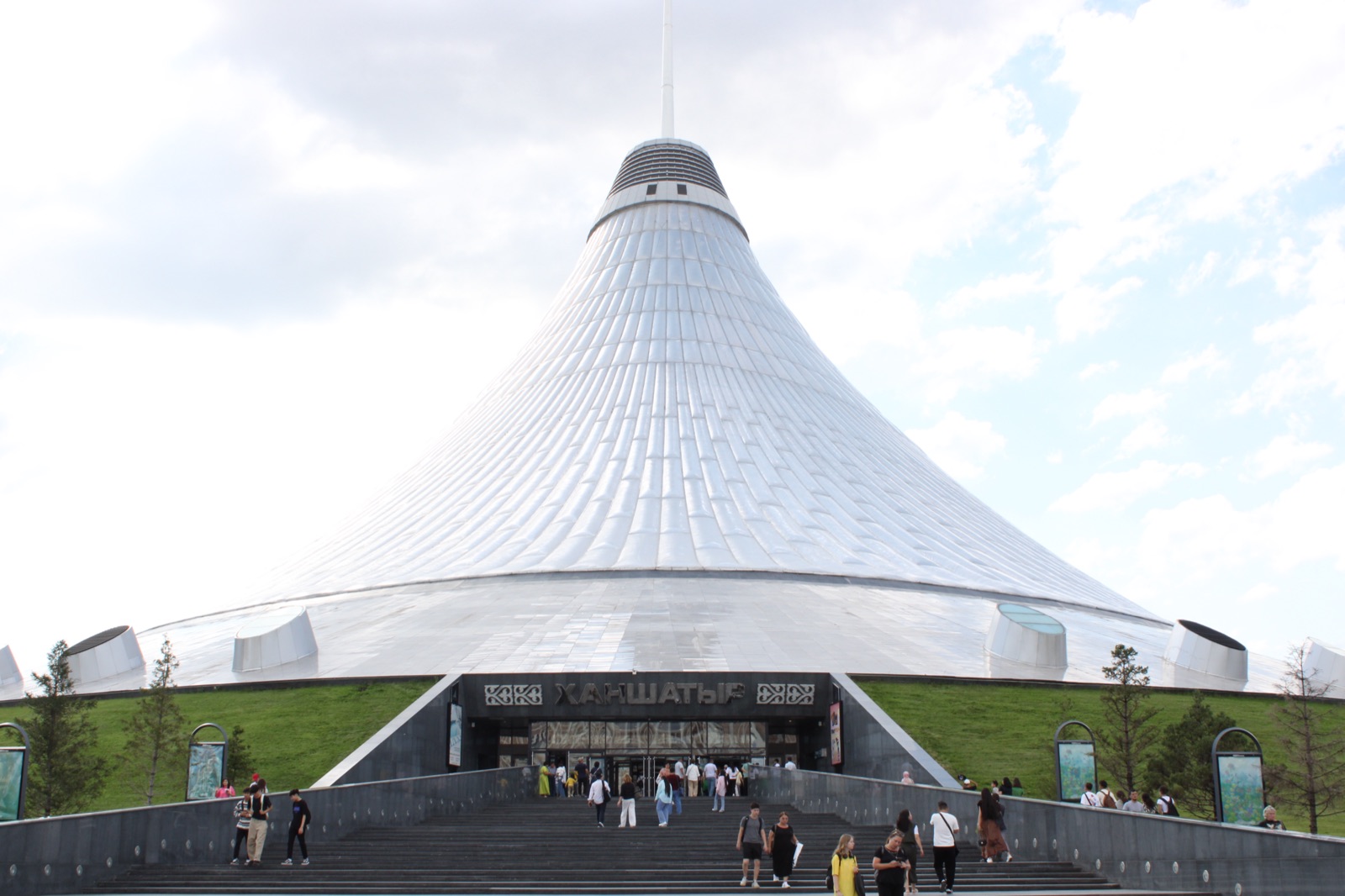
Khan Shatyr
A 150-metre-high translucent tent by Foster + Partners, opened in 2010 and widely billed as the world's largest tent. Inside are shops, restaurants, a boating river, mini golf and an indoor beach resort. It is the city's best refuge in cold weather, and the food court is an easy lunch.
Astana Opera
The country's grand opera and ballet house. An evening performance is the best night out in town, so check the programme on the theatre's own site and book ahead.
Museums and Monuments East of the River
National Museum of Kazakhstan
The largest museum in Central Asia when it opened in 2014, and the best single introduction to the country. Eleven halls run from prehistory to independence. The Hall of Gold, with Saka treasures including the Issyk Golden Warrior, is the highlight.
Palace of Peace and Reconciliation
A 62-metre glass pyramid by Foster + Partners, finished in 2006 to host the Congress of Leaders of World and Traditional Religions. It holds an opera hall and a conference chamber at the apex. Check visiting times before you go.
Hazret Sultan Mosque
A white mosque with a 51-metre dome, holding about 5,000 worshippers and up to 10,000 on holidays. It was long described as Central Asia's largest, a title that passed to the Astana Grand Mosque in 2022, but it remains much the easier of the two to fit into a day in the centre. Visitors are welcome outside prayer times. See our notes on mosque etiquette.
South Along Mangilik El Avenue
Astana Grand Mosque
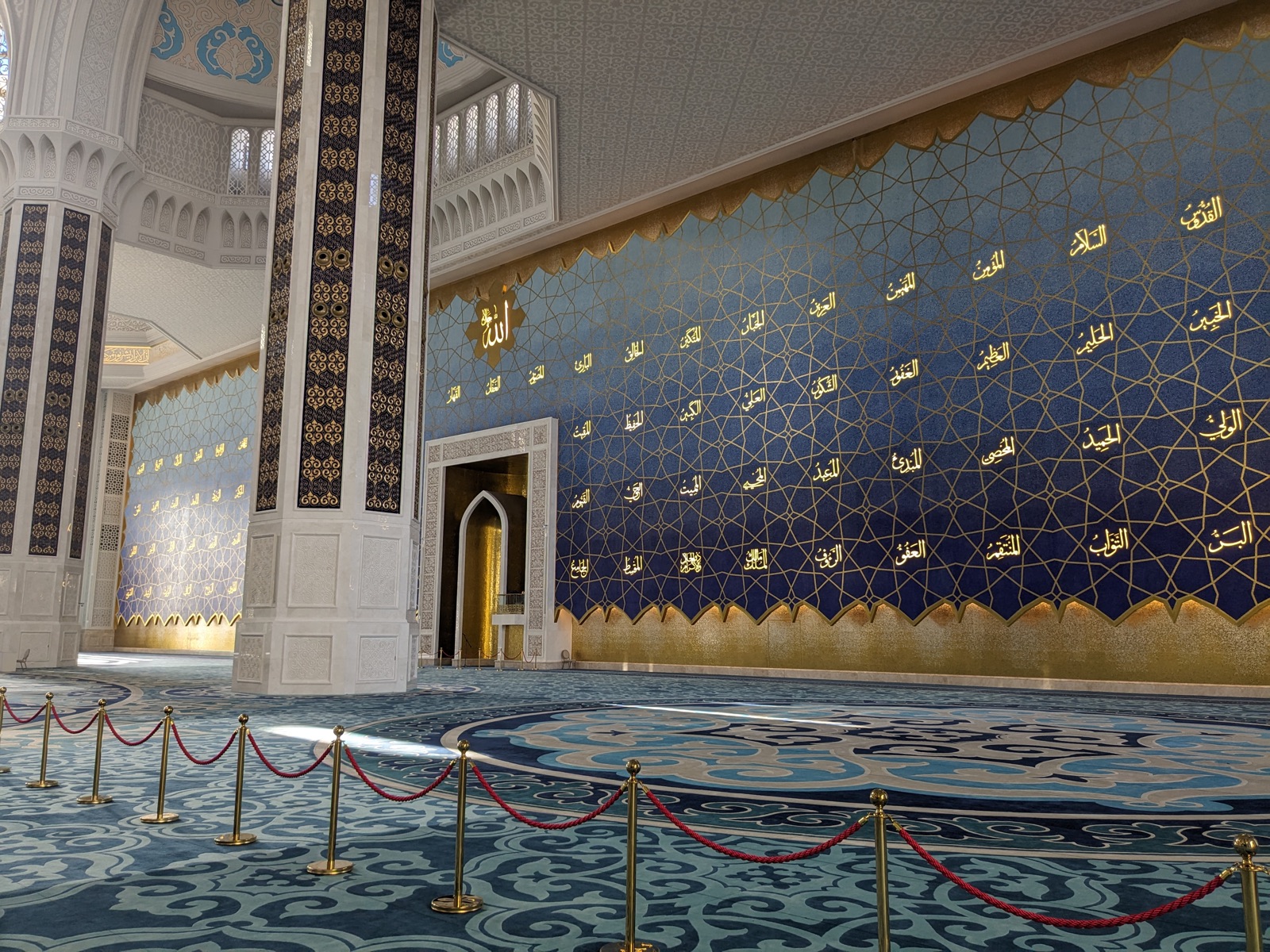
The largest mosque in Central Asia, opened in August 2022. The halls hold 35,000 people, 30,000 men and 5,000 women, and the courtyard another 200,000. The 99 names of Allah run across the walls of the main prayer hall. Entry is free, shoes come off at the door, and modest dress is required; women can usually borrow a robe and headscarf. It stands at 65 Mangilik El Avenue, and bus 43 stops outside. Avoid prayer times.
Nur Alem, Museum of Future Energy
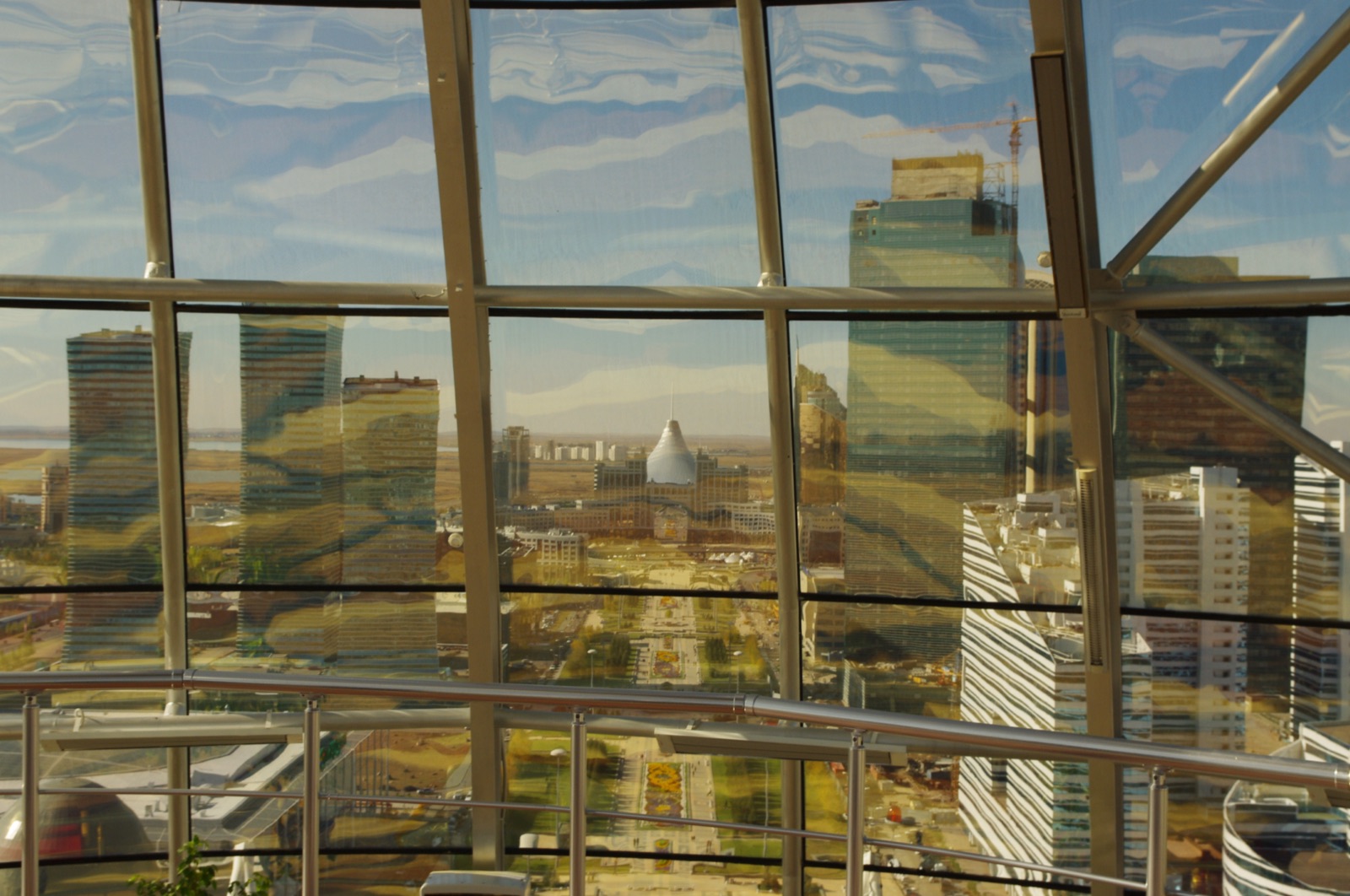
The giant glass sphere built as the Kazakhstan Pavilion for Expo 2017, now an eight-level museum of energy and technology with interactive displays. It suits families, and the sphere itself is the main reason to go.
How Cold Is Astana in Winter?
Astana's January averages about -14°C, with nights around -20°C and cold snaps of -30°C or lower. It is usually ranked as the second-coldest national capital in the world after Ulaanbaatar, and its all-time low is -51.6°C, set in 1893. Temperature is only half of it: the steppe wind runs straight down the wide avenues, so -15°C can feel far colder.
Through the year, expect:
- Winter (November–March): deep cold and snow on the ground, often with bright, dry days
- Spring (April–May): a fast thaw, with April still cold and May properly mild
- Summer (June–August): warm, with July days around 27°C and nights around 15°C
- Autumn (September–October): pleasant in September, cooling quickly after that
The best months for a visit are May, June and September. If you do come in winter, the city still works, because so much of it happens indoors:
- Bring insulated boots with real grip, a hat that covers your ears and something to cover your face in the wind
- Plan outdoor sights in short bursts, and link them with Khan Shatyr, malls and museums
- Book a taxi from inside rather than waiting at a bus stop
- Keep your phone in an inside pocket, as batteries fade quickly in the cold
Our Kazakhstan weather guide has more on coping with the cold, and when to visit compares the regions month by month.
How to Get from Astana Airport to the City
The light rail is now the simplest way in. The Tarlan LRT runs from the airport (NQZ) through the Left Bank to Nurly Zhol railway station in about 40–50 minutes for 200₸, stopping at Baiterek and National Museum on the way. It runs from 06:00 to 23:00.
- Taxi app: Yandex Go or inDrive to the centre, roughly 3,000–6,000₸. Sources vary, so check the live price in the app, which shows it before you book.
- City bus: buses 10 and 12 have long served the airport, at 110₸ by card or app and 180₸ in cash. Confirm the route in 2GIS.
- Tourist bus cards: the city has been selling prepaid cards at the airport for 5, 10 or 15 bus trips (1,550₸, 2,110₸ and 2,650₸), which work without an app. They cover buses; check whether they are valid on the LRT before relying on one.
Getting Around Astana: LRT, Buses and Taxis
Astana now has a light rail line, and it changes how you can see the city. Tarlan, the LRT, opened on 16 May 2026 after about a decade of delays. Its 22.4km line has 18 stations and links the airport to Nurly Zhol, passing the Expo area, Baiterek and the National Museum.
- Fares: 200₸ a journey. Passes introduced in August 2026 include one day for 500₸ and three days for 1,500₸, which pay for themselves quickly.
- Paying: bank cards, phone wallets and QR codes work, and travel cards are sold at every station.
- Useful stops: Airport, Baiterek (Nurzhol Boulevard), National Museum (the cluster east of the river) and Nurly Zhol (the railway station).
- Buses: over 100 routes, 110₸ by card or app and 180₸ in cash. Use 2GIS, or the Transcard or Avtobys apps, for routes and times.
- Taxis: Yandex Go and inDrive are cheap and reliable. See our transport guide and phone and internet guide for what to install before you land.
How to Get to Astana from Almaty
Fly unless you specifically want the train. The flight takes about 1.5 hours and is the busiest domestic route in the country, flown by Air Astana, FlyArystan and SCAT. Fares are lowest when booked ahead.
The train covers about 1,200km. The fastest Talgo services take around 14 hours and other trains 16–18 hours or more, usually overnight. Kazakhstan is replacing its Talgo stock with newer Stadler carriages, so check which service you are booking on railways.kz. Astana has two main stations, Nurly Zhol on the Left Bank and the older Astana-1 on the Right Bank, so read your ticket before you set off. Only Nurly Zhol is on the LRT.
International flights arrive from hubs such as Istanbul and Dubai, and a common route around the country is Almaty and Astana on the same trip, flying between them.
Where to Stay and Eat
Where to Stay
- Left Bank, near Nurzhol Boulevard: the most convenient for a short trip, within reach of Bayterek and the LRT, and generally the priciest
- Right Bank: older streets, more local life and usually better value
- Near Nurly Zhol station: practical for late trains and for the LRT, less so for evenings out
- Our accommodation guide covers prices and booking
Where to Eat
- Kazakh restaurants in the centre: many serve beshbarmak, often in a yurt-style dining room
- Khan Shatyr and other malls: food courts for quick Kazakh and international meals
- Restaurants change quickly, so check recent reviews on 2GIS
- Cards are widely accepted, as our money guide explains, but carry some cash
Day Trips from Astana
The three best trips from Astana are a memorial, a lake district and a flamingo reserve, and each needs some planning because public transport is thin.
ALZHIR Memorial Museum
ALZHIR is the most affecting half-day trip from the capital, about 35km west of the city at Akmol. It stands on the site of the Akmolinsk Camp of Wives of Traitors to the Motherland, a Gulag camp for women imprisoned because of their husbands' alleged crimes. The memorial and museum opened in 2007. It is usually closed on Mondays, entry is inexpensive, and a taxi takes about 40–60 minutes each way.
Burabay (Borovoe)
Burabay is the place to go for lakes and pine forest, about 245km and three hours or so to the north. Buses and minibuses leave from Saparzhay bus station next to the railway station, and trains stop at nearby Shchuchinsk and Burabay stations. It works as a long day, but it is far better with a night there. See our guide to Lake Borovoe.
Korgalzhyn Nature Reserve
Korgalzhyn is a wetland reserve about 130km south-west of Astana, part of the Saryarka UNESCO World Heritage site and home to the world's most northerly breeding colony of greater flamingos. The birds are there from about mid-April to September. The drive takes around two hours, so most visitors book a one-day tour, which also deals with reserve permits and access. Arrange it in advance, as there may be nobody at the visitor centre if you simply turn up.
Two Days in Astana: A Simple Plan
Day 1: The new capital
- Morning: Bayterek when it opens, then walk Nurzhol Boulevard to Khan Shatyr for lunch
- Afternoon: take the LRT from Baiterek to National Museum and spend two or three hours inside
- Evening: Hazret Sultan Mosque and the Palace of Peace at dusk, then the lit-up towers from the embankment, or an evening at the opera
Day 2: Faith and memory
- Morning: the Astana Grand Mosque, then Nur Alem on the former Expo site
- Afternoon: ALZHIR by taxi, which takes about half a day. It is usually closed on Mondays, so swap the days if needed.
- Evening: a Kazakh dinner on the Right Bank
With a third day, go to Burabay or, from late spring to September, Korgalzhyn.
Astana or Almaty for a City Break?
Choose Almaty for mountains, food and street life, and Astana for architecture, museums and modern politics. Almaty has the better markets, cafes and day trips, while Astana has the biggest museum, the most striking buildings and a clearer sense of what independent Kazakhstan wants to be. If you are planning a culture-focused city break, the two pair well: they are 1.5 hours apart by air, and a week split between them shows you the two sides of the country.
Start with our Almaty guide or see the sample Kazakhstan itineraries.
Astana Quick Facts
- Population: about 1.7 million (2026)
- Capital since: December 1997, replacing Almaty
- River: Esil (Ishim)
- Airport: Nursultan Nazarbayev International (NQZ)
- Time zone: UTC+5, like the rest of Kazakhstan since March 2024
- Currency: tenge (₸)
- Languages: Kazakh and Russian; see our language guide
Astana: Questions Travellers Ask
Is it Astana or Nur-Sultan?
Astana. The city was called Nur-Sultan only from March 2019 until September 2022, when the name was changed back. You may still see Nur-Sultan on older maps and booking sites.
What is the temperature in Astana in winter?
January averages about -14°C, with nights around -20°C and cold snaps of -30°C or lower. Wind makes it feel much colder. Astana is usually ranked the second-coldest national capital in the world after Ulaanbaatar.
How many days do you need in Astana?
Two days is enough for the main sights: one for Bayterek, Khan Shatyr and the National Museum, and one for the Astana Grand Mosque, Nur Alem and the ALZHIR memorial. Add a third for Burabay or Korgalzhyn.
How do I get from Astana airport to the city?
The Tarlan LRT is the simplest option. It runs from the airport to Nurly Zhol railway station in about 40 to 50 minutes for 200 tenge, stopping at Baiterek and National Museum, from 06:00 to 23:00. A taxi app is roughly 3,000 to 6,000 tenge, and the app shows the live price.
How do I get from Almaty to Astana?
Fly if you can: the flight takes about 1.5 hours. The train covers about 1,200km and takes around 14 hours on the fastest Talgo services and 16 to 18 hours or more on others, usually overnight.
What is the largest mosque in Astana?
The Astana Grand Mosque, opened in August 2022, is the largest in Astana and in Central Asia. Its halls hold 35,000 people and its courtyard another 200,000. Hazret Sultan Mosque, which held about 10,000 at its fullest, is the older and more central landmark.
Is Astana worth visiting?
Yes, if you are interested in architecture, museums or modern Kazakhstan. It is less rewarding than Almaty for food and outdoor trips, so two days is usually the right length, ideally between May and September.